Tradesmen of St. Croix
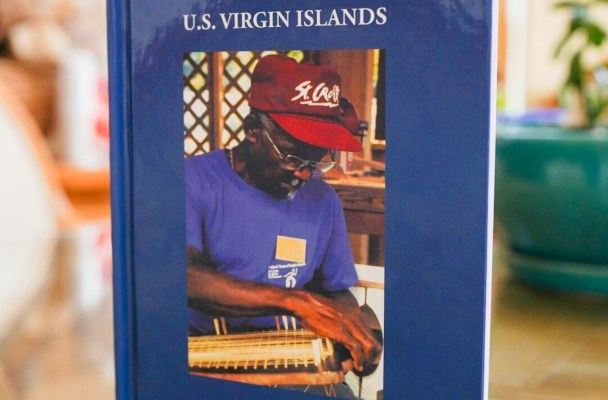
The cover of Tradesmen of St. Croix features the author’s father, Will Thurland applying the “caning” technique to mahogany furniture.
July 2019
by Monique Clendinen Watson
I just read Tradesmen of St. Croix, U.S. Virgin Islands by Virgin Islands historian and culture bearer Karen Thurland and was transported back through memory to the Christiansted of my parents’ and grandparents’ generation and my own childhood in the 1960s and 1970s. Thurland’s latest book, a collection of oral histories of St. Croix men and their families who were carpenters, joiners, jewelers, blacksmiths, tailors, cobblers and more from the days of enslavement well into the 1960s gives historical insight into the lives of the ordinary people who worked in and built the island’s historic towns. Thurland writes: “Enslaved men who learned a trade were sometimes hired out to other plantations and saved enough money to buy their own freedom and that of family members. The trade was passed on to their children, many who became a part of the free colored population on the island.”
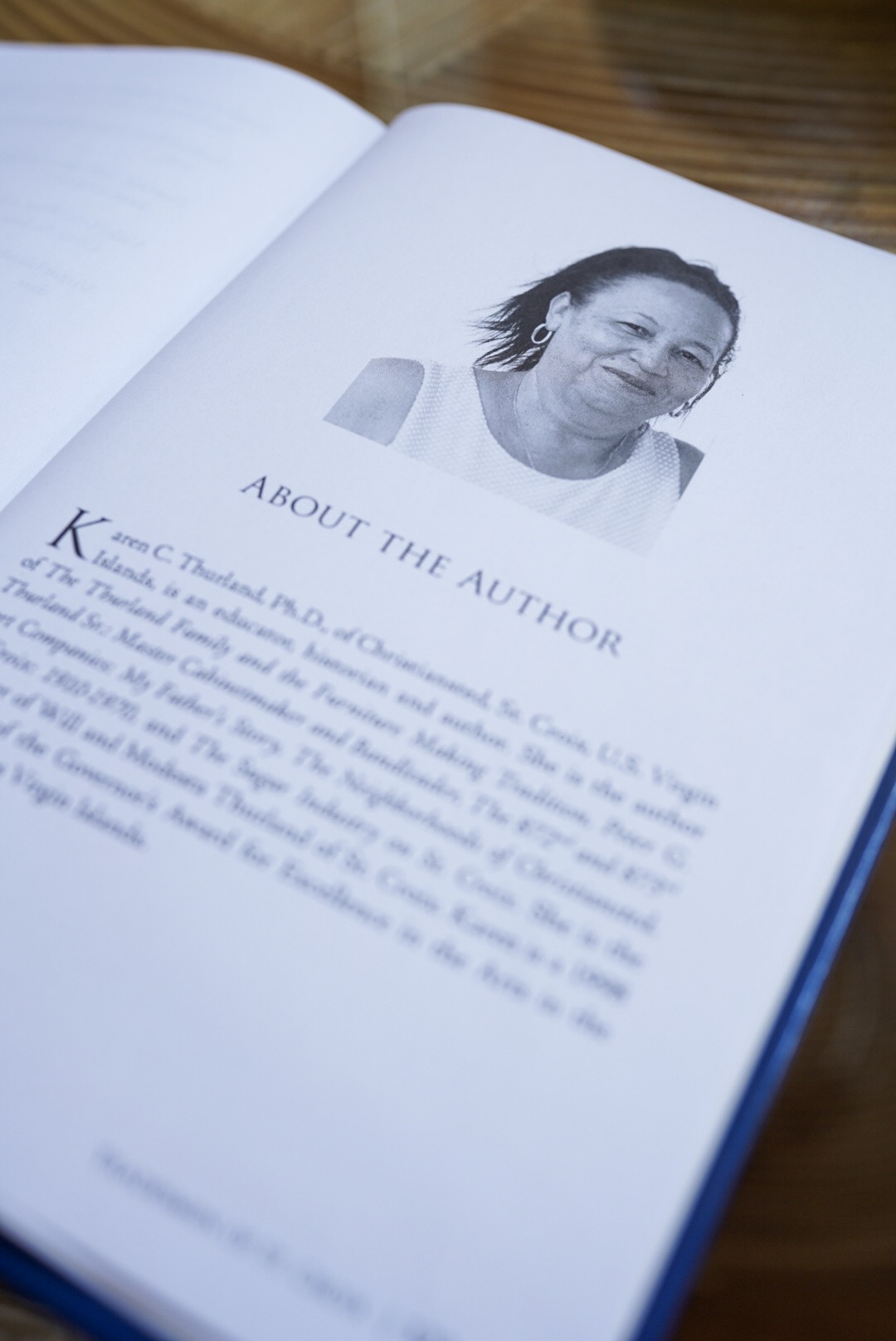
Christiansted began as a Danish colonial town, with Company Street being named for the Danish West India and Guinea Company, the financial structure by which the Danes funded their sugar industry. The Guinea part of the name refers to the West Coast of Africa from which they got the enslaved labor to fuel their enterprise. (See earlier article at https://companystreetchronicles.com/about/) St. Croix architect Gerville Larsen calls the buildings on Company Street and throughout the town “Afro-Danish fusion.” He points out that while Danish architectural patterns distinguish towns in the U.S. Virgin Islands from those on other Caribbean islands, the West African contribution, the skill and knowledge of the enslaved and their descendants are central to the character and durability of the towns. In the book Christiansted at 275 – Celebrating the 275th Anniversary of the founding of Christiansted, St. Croix, historian George Tyson writes: “Christiansted from the outset has been not a Danish town, but an African-Danish town, not only because Africans and people of African descent employed their skills in its creation, but also because they populated it, transformed it and exploited its potential for survival.”
In Tradesmen of St. Croix, U.S. Virgin Islands, Thurland gives insight into the lives of the men who across the centuries, populated, transformed and utilized the town to engage in community and commerce and to secure the futures of their children. Thurland writes: “St. Croix…had a large number of black tradesmen who operated their own shops in its towns. These men passed on vital technical skills to their sons and apprentices.”
My late father, James “Belto” Clendinen, like many boys of his generation who grew up in the 1930s and 1940s, was apprenticed to a tradesman in the community, so that along with his formal schooling, he could learn a trade.

The community think at the time was for young men to “get their learning and a trade” so that they could become productive members of their communities. He apprenticed with “Mr. Solomon,” learning basic skills in his carpentry shop. His cousins, Ejnar, Monroe, and brothers, apprenticed in their father’s shop, famed St. Croix goldsmith, Monroe Clendenen, one of the subjects of Thurland’s book. Their generation, the last to be apprenticed to tradesmen, lived the transition of the Virgin Islands from sugar/agriculture to a tourism/oil economy, so most went on to careers in government or the private sector, where more stable incomes could be made in a changing time.
Thurland tells the stories of the tradesmen, blacksmiths, masons, shoemakers, goldsmiths and joiners, and their proficiency in their respective crafts. “Their creations were made with hand tools and required skill, creativity and patience and long hours to finish,” she writes. More importantly, she shed light on their social lives and community connections. “These men took on an active role in their respective churches, served on civic and religious committees and also made financial contributions to those institutions,” she said.

“The tradesmen engaged in many community activities and provided positive guidance to island youngsters by organizing musical bands, festival troupes and sports activities.” From a family of well-known joiners and furniture makers herself, Thurland describes in detail the process of local furniture making and shares her memory of her grandfather’s workshop on Hospital Street. She not only features several craftsmen and their families in-depth, like joiner Arthur Abel of Frederiksted and her twice great-uncle goldsmith Peter H. Thurland of Christiansted, but also remembers in reverence the names others of the era or in history that did the work island communities relied on for daily living.
Thurland did her research through the Research Library & Archives at the St. Croix Landmarks Society at Estate Whim and through interviews with surviving family members of the tradesmen and in some cases with the tradesmen themselves. With access to genealogical records and the ability to trace ancestral origins in Africa and Europe and through the Danish archives, recently made available during the Centennial Transfer commemoration, Thurland’s chapters depict the diversity of talent of the featured tradesmen, who were the backbone of their communities. In addition to their trades they were musicians, teachers, sportsmen, churchmen and civic leaders, who worked quietly and diligently to hold their communities together through patience and perseverance. One craftsman gives his eyewitness account of Transfer Day in Christiansted and told of the conflicts between the people and the military government that governed St. Croix and her virgin sisters after the Transfer. Thurland includes a eulogy to Peter H. Thurland, a musician and craftsman of renown written by St. Croix labor leader, journalist and jurist D. Hamilton Jackson. There are stories about cricket playing and purchasing handmade coffins, and other unfolding matters in lives of the craftsmen and their families.

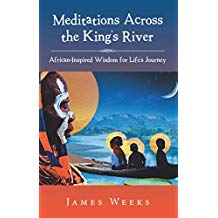
Today when Virgin Islands people speak of culture, they are usually referencing music, arts and foodways, which have survived and evolved by way of our yearly carnivals and festivals and by the intergenerational handing down of traditions. The built heritage of our towns, Christiansted, Frederiksted, Charlotte Amalie and Cruz Bay are acknowledged and are an identifiable part of the Virgin Islands milieu, but not always celebrated as culture because the stories of who built the towns or the generations of people who lived in them have been lost or relegated to family lore. Virgin Islander James Weeks who recently wrote and published the book Meditations Across the King’s River, African-Inspired Wisdom for Life’s Journey writes in one chapter how a local artist, LaVaughn Bell and architect Gerville Larsen helped him take a second look at the architecture in our historic towns. “For the first time, I finally understood that what I had rejected as being Danish colonial architecture is really a fusion of Danish and African origin.” Weeks now intends to include footage of historic Virgin Islands buildings in his film about African healing traditions and spirituality. “Now I have a chance to help reshape a narrative—there are so many stories in those coral stones—stories of resilience, and rich customs and talents from across the sea.”
In the evolving cultural narrative of the U.S. Virgin Islands and the reiteration and re-interpretation that is ongoing in several quarters, there are initiatives to revisit its built heritage and reimagine and repurpose it for the benefit of future generations. Through the work of Frandelle Gerard and CHANT (Crucian Heritage and Nature Tourism, Inc.) and their Invisible Heritage project whose vision is to “engage our local community in rebuilding and occupying derelict structures of the Free Gut neighborhood in Frederiksted” and the In Search of Identity project that seeks to rehabilitate the Jarvis School on St. Thomas and the Old Barracks on St. Croix through a restorative justice collaboration between Denmark and the Virgin Islands there is brewing energy to retrieve our aging towns from ruin and retell their stories in full spectrum. Thurland’s book is an important piece in the developing dialogue of who we were, who we are and who will be in this special place, the Virgin Islands of America.
To read more about St. Croix’s tradesmen, their families and the role they played in building the Virgin Islands you can purchase a copy of Tradesmen of St. Croix, U.S. Virgin Islands from www.amazon.com or www.barnesandnoble.com or from local bookstores such as Undercover Books, www.undercoverbooksstcroix.com, Eden South at 3 Company Street, www.edensouth.com or the Caribbean Museum Center for the Arts, www.cmcarts.com. If you want to read James Weeks’ book about African spirituality and healing traditions, Meditations Across the King’s River you can also purchase it on www.amazon.com or locally from Undercover Books or Eden South. To learn more about the work of CHANT, go to www.chantvi.org. Stay tuned for more about the In Search of Identity project. As the world we live in is global and interactive, I would like to hear from you who know and love St. Croix who may have stories, pictures or memories to share about Company Street. Contact me at mcw@bluegaulinmedia.com. Photos courtesy Karen Thurland , James Weeks, Chalana Brown and Ciara Watson.
Monique Clendinen Watson is a writer and public relations specialist who is from the U.S. Virgin Islands and who lives in Virginia. She writes about the history, art and culture of the Virgin Islands at https://companystreetchronicles.com. She owns a public relations firm, BlueGaulin Media Strategies, LLC, learn more at www.bluegaulinmedia.com. BlueGaulin Media Strategies and Company Street Chronicles are copyrighted. All rights reserved. July 20, 2019.
 Company Street Chronicles
2 Responses to “Tradesmen of St. Croix”
Greatness got to get the book,Builder kid,DAVID O’Flaherty CARPENTER BUILDER from NEVIS N STKITTS ,BUT NEVIS MOM N DAD GERTRUDE .AM a Stage Theater tech FILM – Lightning – SCENERY DESIGNER NYC 1981 -NOW main scene AFRICAN AMERICAN FILM N THEATER, N OTHER PEOPLES . Seeing him build our home in nevis runs throughout my brain as I do my work here. KICK OUT THE JAMS WRITTER. HOTEP
LikeLiked by 1 person
There are so many similarities in the history of the islands. You should interview your parents. Many stories there, I am sure.
LikeLike